

Ackerley Hoping to ‘Nail’ Preakness Victory with Chip Honcho
Chance Interview in 1993 Led to Horse in Middle Jewel of Triple Crown
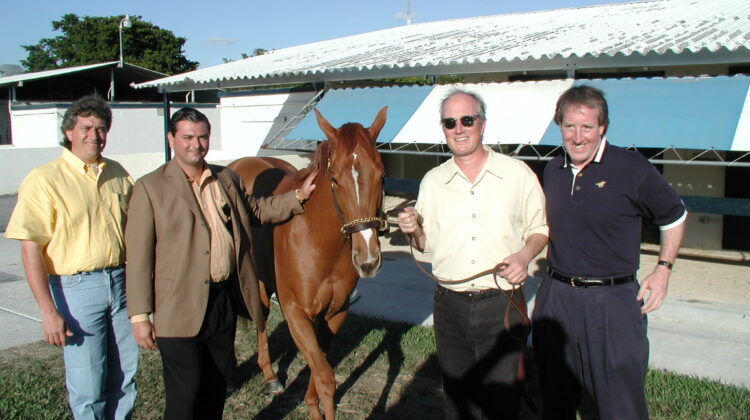
Preakness Stakes news feature (Above: 1998 photo at the OBS February 2-year-old sale at Calder, from left: Steve Asmussen, John Cilia, Bob Ackerley, Lee Ackerley. Photo courtesy Lee Ackerley)

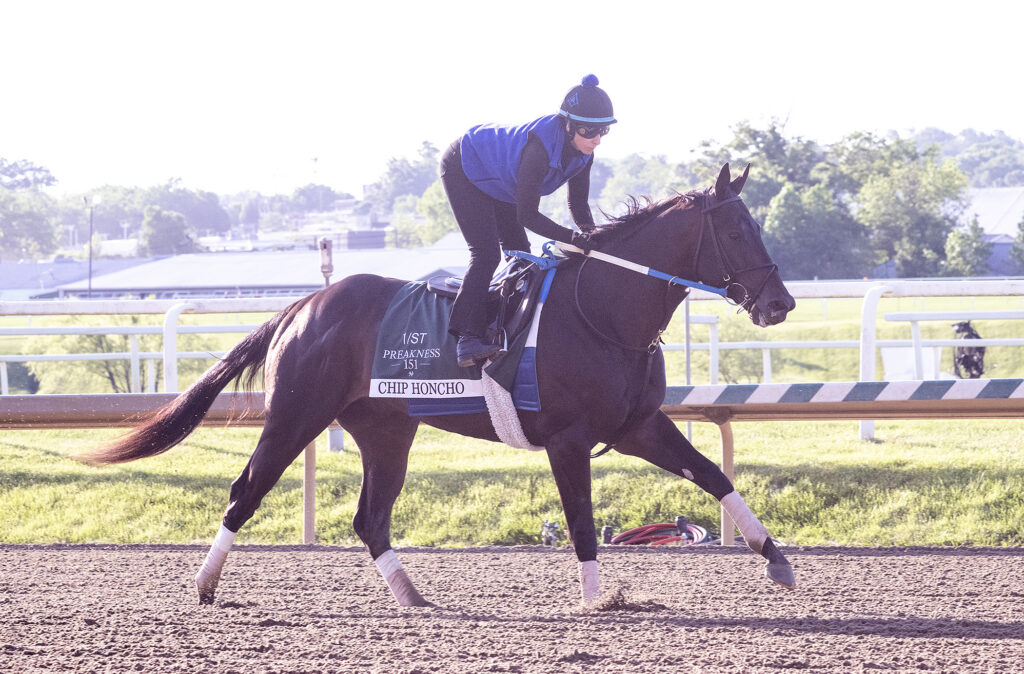
LAUREL, MD – There’s an old saying, ‘For want of a nail, the kingdom is lost.’ If not for a nail appointment, Chip Honcho might not be in Saturday’s 151st Preakness Stakes (G1) at Laurel Park – at least not with owner Lee Ackerley and Hall of Fame trainer Steve Asmussen.
The story begins decades ago in southern Texas, where James Sherwood grew up riding and training Quarter Horses at non-parimutuel tracks alongside a young phenom named Steve Asmussen. After graduating from Texas A&M in 1987 with a degree in economics, the lure of the track proved too much, and Sherwood became Asmussen’s assistant trainer at Oklahoma’s Remington Park.
Ultimately, Sherwood decided he needed to put that college education to work and that he and his then-girlfriend needed jobs. Being the helpful boyfriend, Sherwood said he signed up his girlfriend at the university’s placement center for a job interview with a small Houston company that brokered computer chips.
“I go home and tell her, ‘Hey, you got a job interview tomorrow at 8 o’clock,’” Sherwood recalled in a recent phone interview. “She’s like, ‘I can’t go to that.’ I’m like, ‘Why?’ She was like, ‘I’ve got a nail appointment.’”
Thinking it irresponsible for no one to show, Sherwood said he went instead to that 1993 interview that changed his life. There he met Bob Ackerley, who with his brother Lee founded what today is simply called Smith, the world’s leading independent distributor of electronic components, including computer chips and semiconductors.
The Ackerleys, by that time living in Houston, grew up in Floral Park, N.Y. near Belmont Park and were racing mainly claiming horses in their former state. When Bob Ackerley saw “horse trainer” on Sherwood’s resume, they quickly got to talking. Bob introduced him to Lee. Sherwood was hired and ultimately became Vice President of Sales.
“They’ve got this little computer chip brokerage company,” Sherwood said, “and they said, ‘Look, you’re going to do computer chips part-time, but we have a passion for the Thoroughbred business. We want to get more into racing at a higher-quality level. You came from that business, what would you suggest?’
“I said, ‘I’m going to introduce you to a family, and they are the hardest-working people in the Thoroughbred racehorse business,” he added. “‘The Asmussens are from Texas. I’ve known them my whole life and trust them, if you wanted someone to kind of hold your hand and walk you through the process: how do you get stakes horses versus showing up with $25,000 and claiming some junk?’”
With Steve Asmussen as their trainer, the Ackerleys began racing at newly opened Sam Houston Race Park in 1994. The next year, the Ackerley brothers and Sherwood went to Laredo, Texas and met Keith Asmussen, Steve’s dad, who walked them through the steps of buying yearlings and 2-year-olds. They went to the 1995 OBS February sale of 2-year-olds in Florida, buying Valid Expectations for $225,000 on Keith’s recommendation.
The next year, Valid Expectations won the Derby Trial (G3), now run as the Pat Day Mile, at Churchill Downs, for their first graded-stakes win as well as Steve Asmussen’s. The Ackerleys also owned Jersey Girl, the first graded-stakes winner and Grade 1 winner for Hall of Fame trainer Todd Pletcher.
A 12-time winner and earner of $596,092 in purses, Valid Expectations’ quick success did not make Lee Ackerley think horse racing was an easy game.
“No,” he said. “It would be no fun if it were easy. People spend millions on horses, and then a California Chrome comes along for $5,000 out of someone’s backyard. That’s what makes racing so much fun.”
The Ackerley Brothers Farm operation grew to well over 100 horses, including breeding stock. At the same time, their company had expanded globally. They downsized their stable, with Bob Ackerley pursuing other interests, including farming organic pecans.
“Two years ago, I decided that I really I missed the racing,” Lee Ackerley said in a phone interview. “Steve called me and said, ‘Hey, I’m at the sale in Kentucky, the yearling sale. Can I pick something out for you?’ And I said, ‘Here’s what you can spend.’ I gave him an allowance, and he picked out two yearlings, and one of them was Chip Honcho, and that kicked it off.”
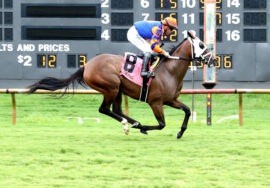
Including $210,000 yearling purchase Chip Honcho, Lee Ackerley said Asmussen bought him a total of six horses that are now 3. One of those, $200,000 OBS March 2-year-old purchase Obliteration, is the 6-5 favorite in Saturday’s $150,00 Chick Lang.
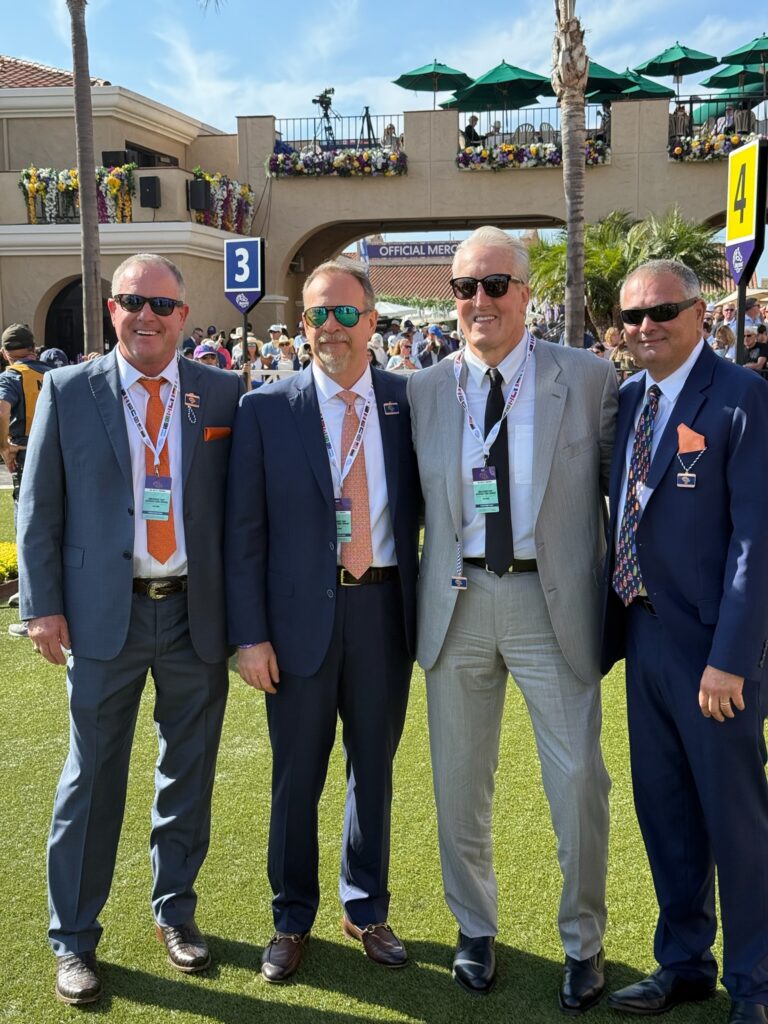
Because he thinks racing is more fun when you share it with other people, Lee Ackerley brought in his longtime racing manager John Cilia, Sherwood and a friend from the racetrack, Jode Shupe. That group owns both Chip Honcho and Obliteration.
Lee Ackerley finds joy in naming his horses. Here’s how Chip Honcho got his:
“Usually, when I buy real estate, it’s under an LLC,” he said. “I bought something in Florida, and it either wasn’t or the real estate agent sold me out. Whatever the case was, one of these real estate things they throw in your mailbox ran a story that said, ‘Chip Honcho Buys Florida Mansion.’ I keep a list of horse names on my phone, because once a year I’m probably going to name seven or eight horses. And immediately that went on the list. Like, okay, Chip Honcho. It was a definite horse name.”
Asked to compare selling semiconductors and racing horses, Lee Ackerley said: “They are both super-exciting businesses. That’s the similarity. I would not have been good in the paper business, or any kind of big industrial thing. Brokering chips is a pirate kind of business. I mean, it is boom and bust. Nvidia is the Gun Runner of the semiconductor business. We deal in all of these brands. And with AI, there’s a huge shortage of memory chips. During the pandemic, a shortage of everything. And, yeah, so our little company that started around a table and my brother’s living room this year is going to be a $10 billion business.”
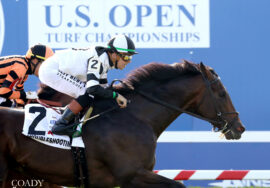
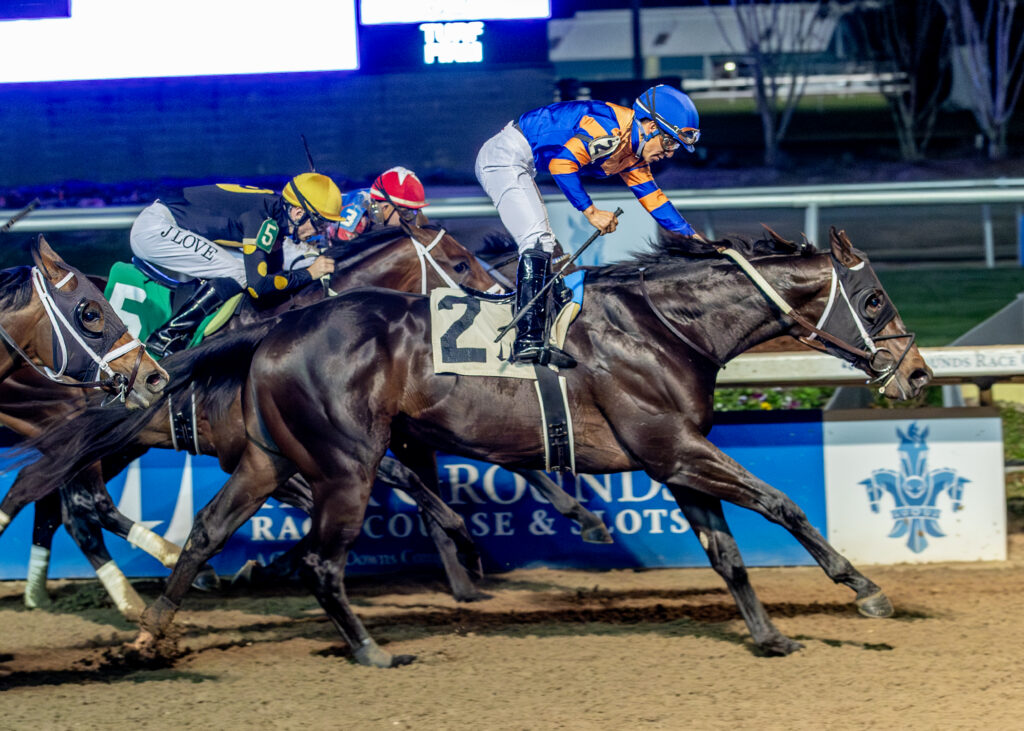
Lee Ackerley laughs today about the role of fate in getting Chip Honcho, winner of the Gun Runner and second in the Risen Star (G2) at Fair Grounds, to the 1 3/16-mile Preakness. Had Sherwood’s long-ago girlfriend canceled her nail appointment, who knows how their racing fortunes might have gone?
“That’s the truth,” Lee Ackerley said. “We may have never met Steve.” He added of Asmussen and Pletcher, “That’s what Bob and I are most proud of, that we picked two young trainers back in the mid ‘90s, and they’re both Hall of Famers.”
Now, in the Middle Jewel of the Triple Crown, Asmussen will try to deliver Ackerley his first victory in racing’s most revered series. When North America’s all-time winningest trainer is asked what horses would be on his personal Mount Rushmore, he always says it starts with Valid Expectations.
“Words would not describe what something like that would mean,” Asmussen said. “Valid Expectations took us to a different level. My first winner ever at Churchill. My first graded-stakes winner. And look what that’s turned into.
“They lived [in Houston] locally,” he added. “They grew up in New York and raced horses there previously. They wanted horses to run locally. Unbelievable. And here we are.”
Story by Jennie Rees